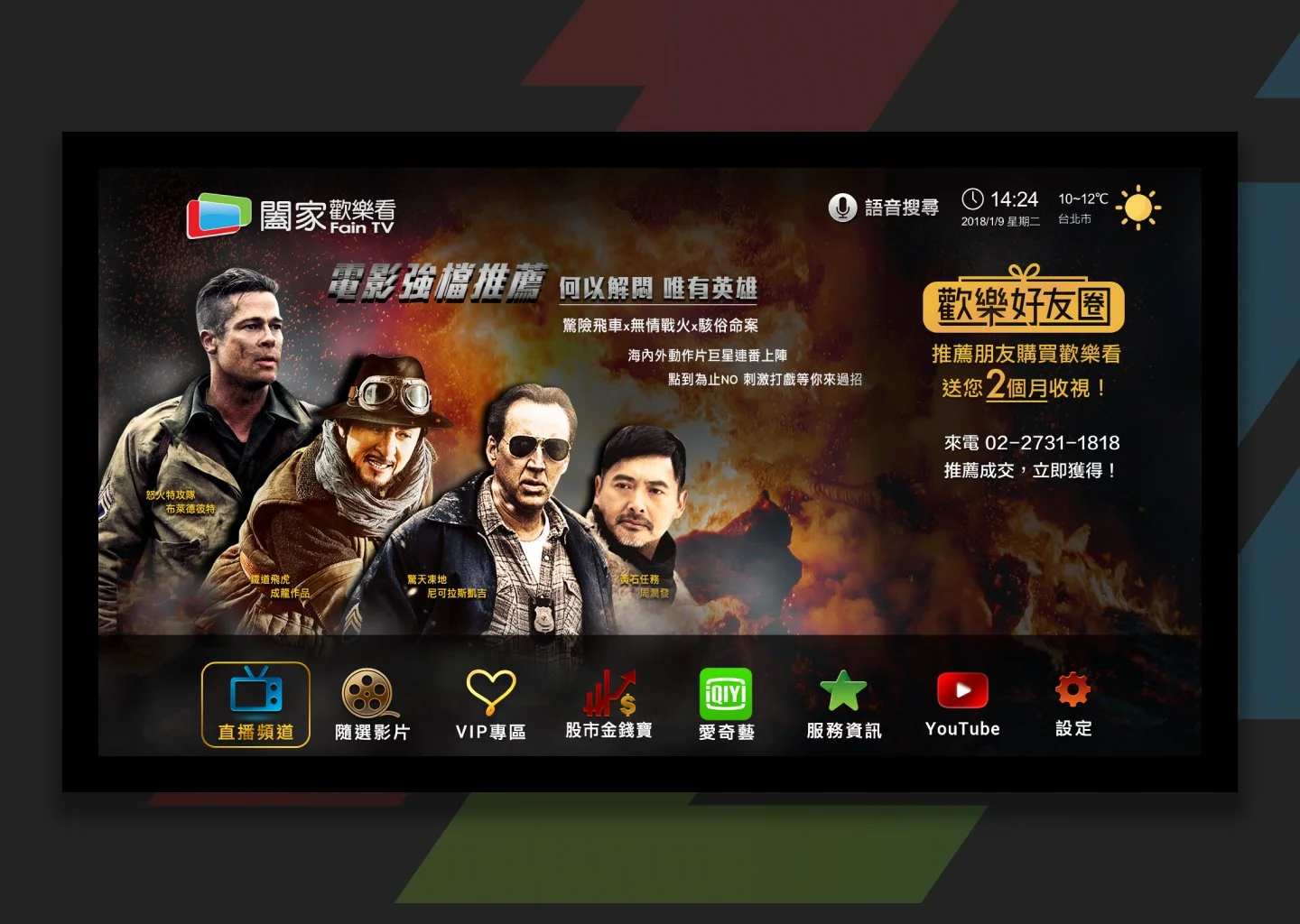
FainTV
FainTV is a prominent streaming service provider in Taiwan, offering an extensive library of live television, movies, and hit dramas. As the UI/UX Designer for this project, I spearheaded the complete redesign of the FainTV 2.0 platform. Our primary objective was to modernize the viewing journey, creating a seamless and intuitive interface that enhances how audiences discover and interact with digital content across multiple devices.
Role: UI / UX Designer
Duration: 1 Year
Problem
Traditional TV interface input is inefficient, hindering content search.
Impact
Wasted user time and lost business opportunity from inaccessible instant purchases.
Solution
Integrating voice navigation and advanced shopping flows to create a seamless cross-platform experience.
Design Process
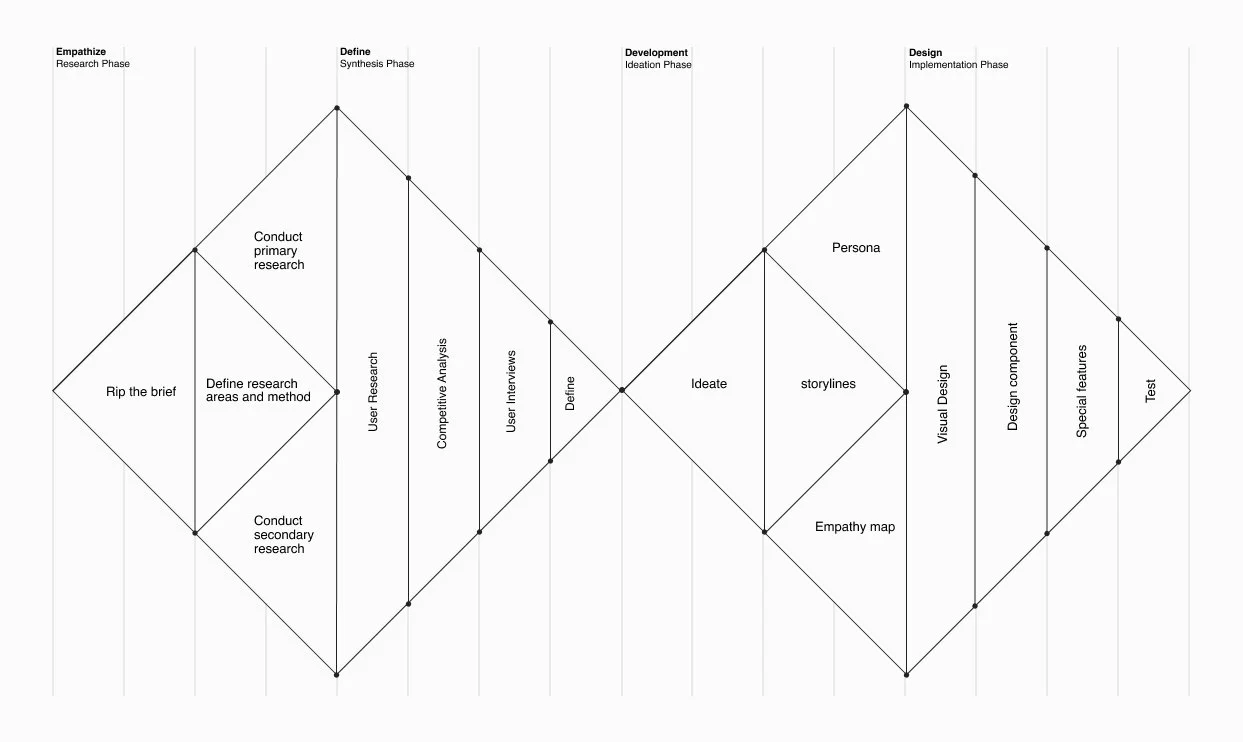
I utilize the Double Diamond framework to ensure every design decision is rooted in data rather than assumptions, beginning with extensive primary and secondary research to uncover core user pain points. By synthesizing these insights into personas and empathy maps, I bridge the gap between user needs and business goals to develop intuitive, cross-platform solutions. Finally, through rigorous testing and iterative refinement, I deliver a scalable design system that simplifies complexity and enhances the overall entertainment experience
User Research Methodology
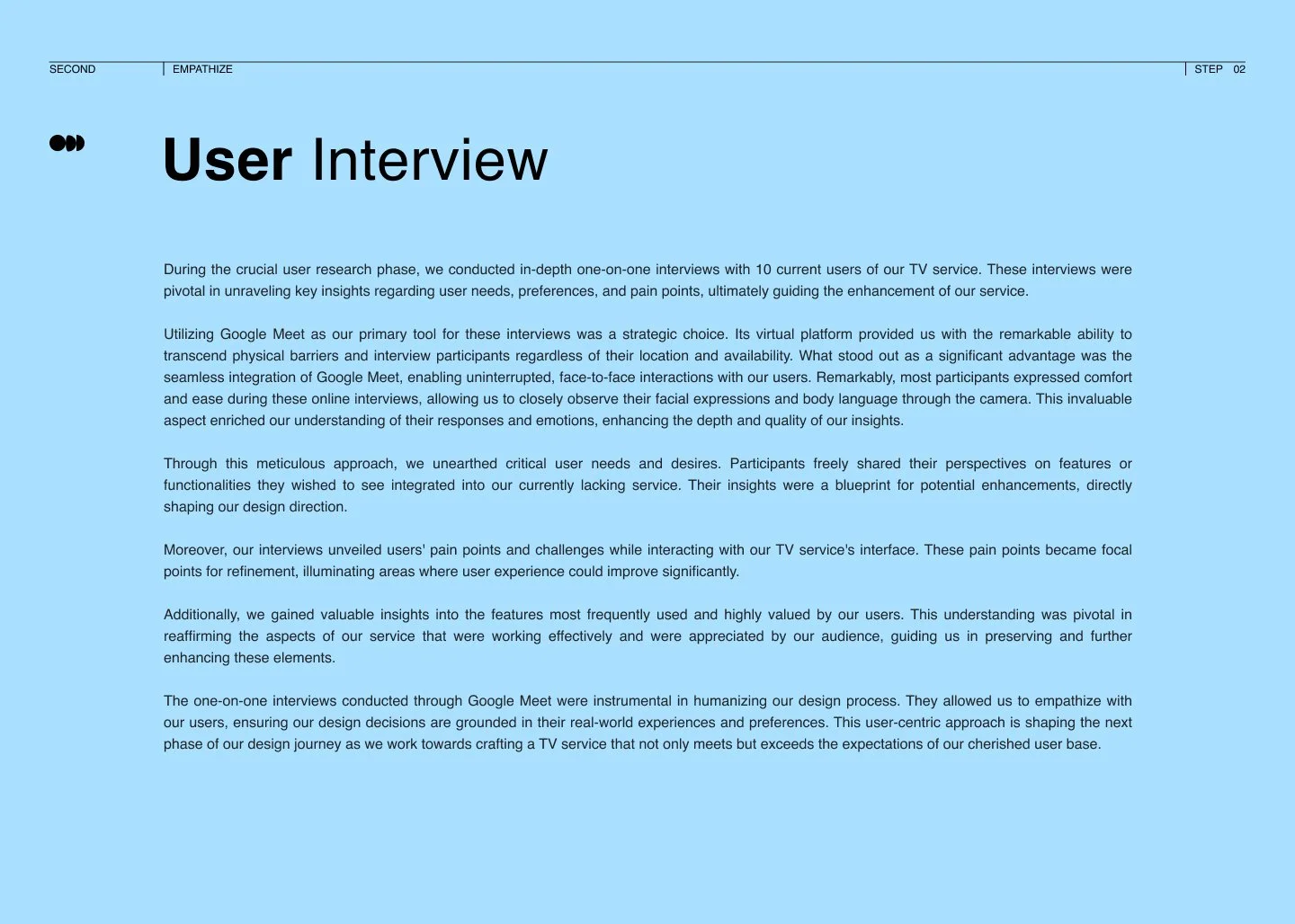
To ensure FainTV 2.0 was built on authentic user needs rather than assumptions, I executed a structured five-stage research framework:
Define Objective Identifying the core business goals and defining the key questions we needed to answer through user insights.
Plan Research Strategy Selecting the most effective qualitative and quantitative methods to gather comprehensive data from our target audience.
Recruit Participants Carefully screening and selecting over 50 participants to ensure a diverse and representative sample of the FainTV user base.
Conduct Research Facilitating in-depth interviews and observation sessions to capture real-time behaviors, frustrations, and expectations.
Analyze Data Synthesizing raw findings into actionable insights, which served as the foundation for our Persona development and User flows.
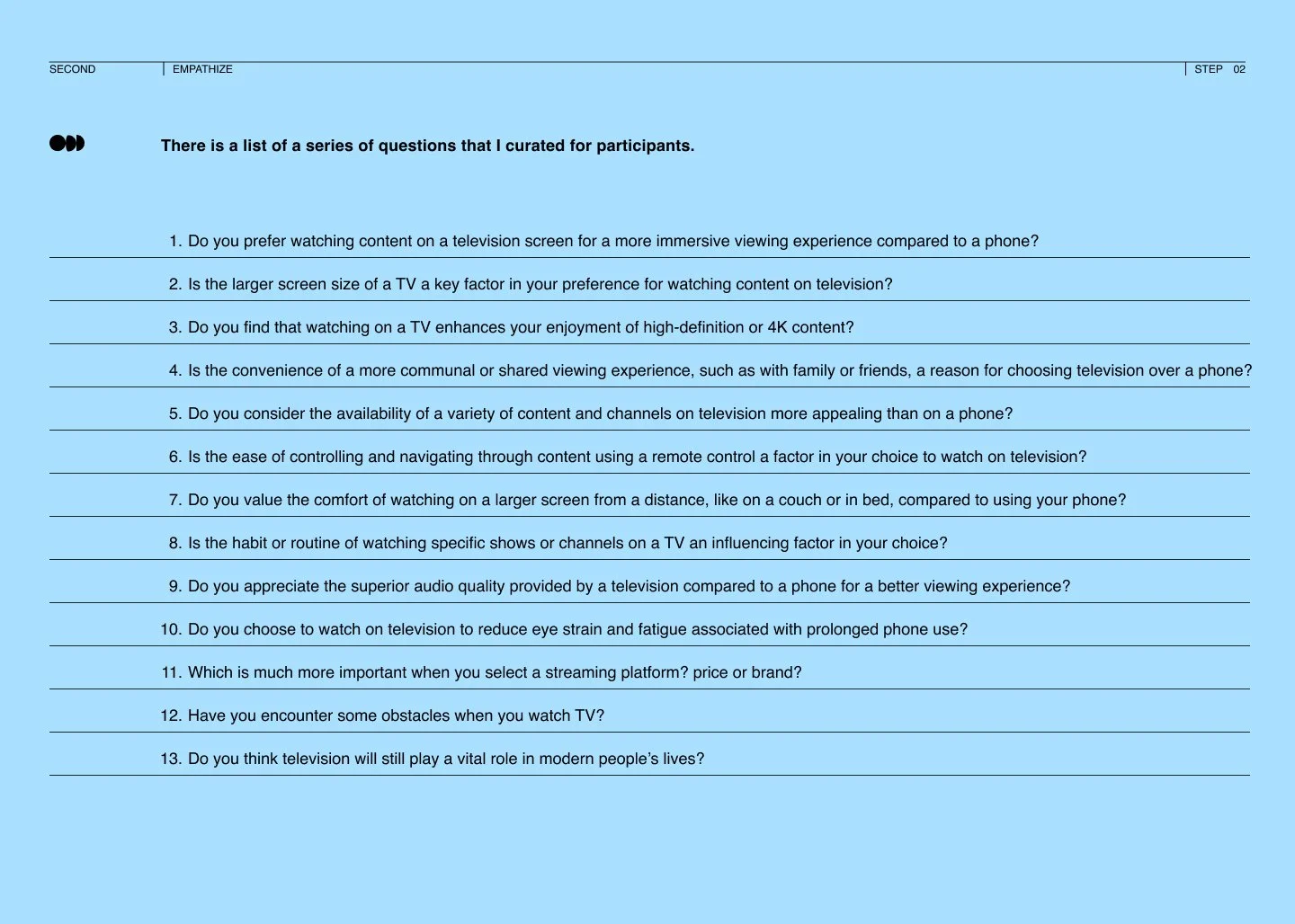
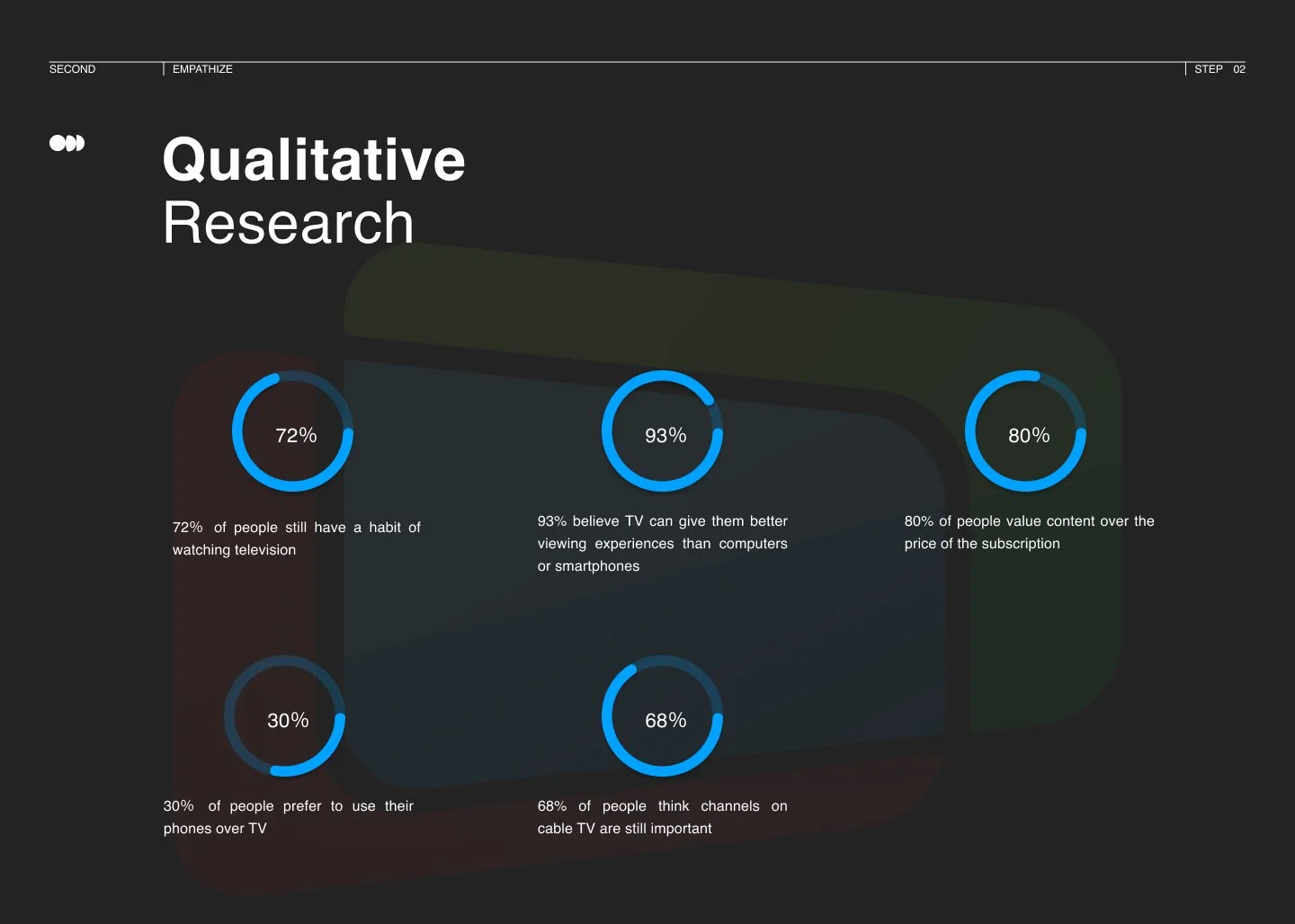
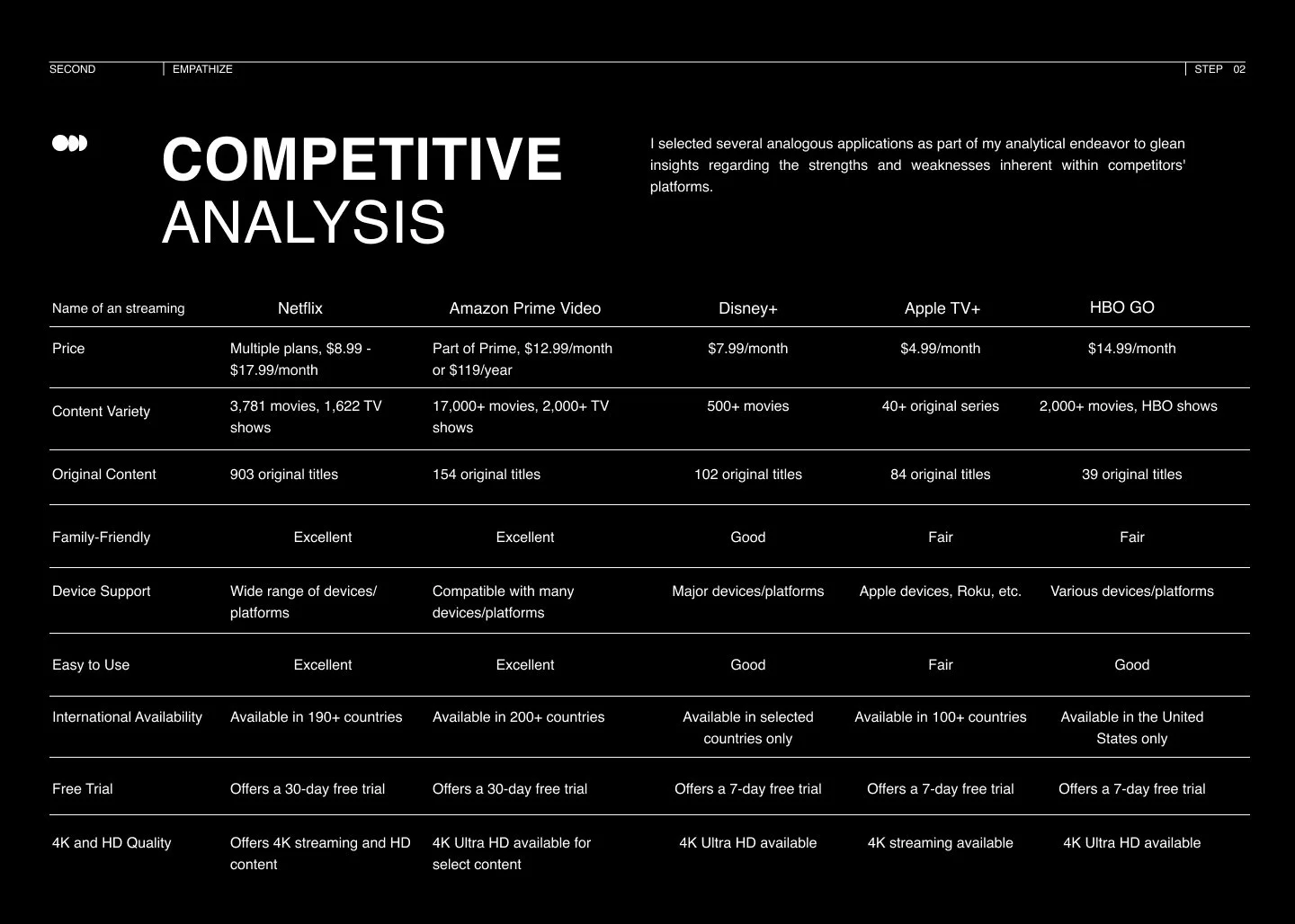
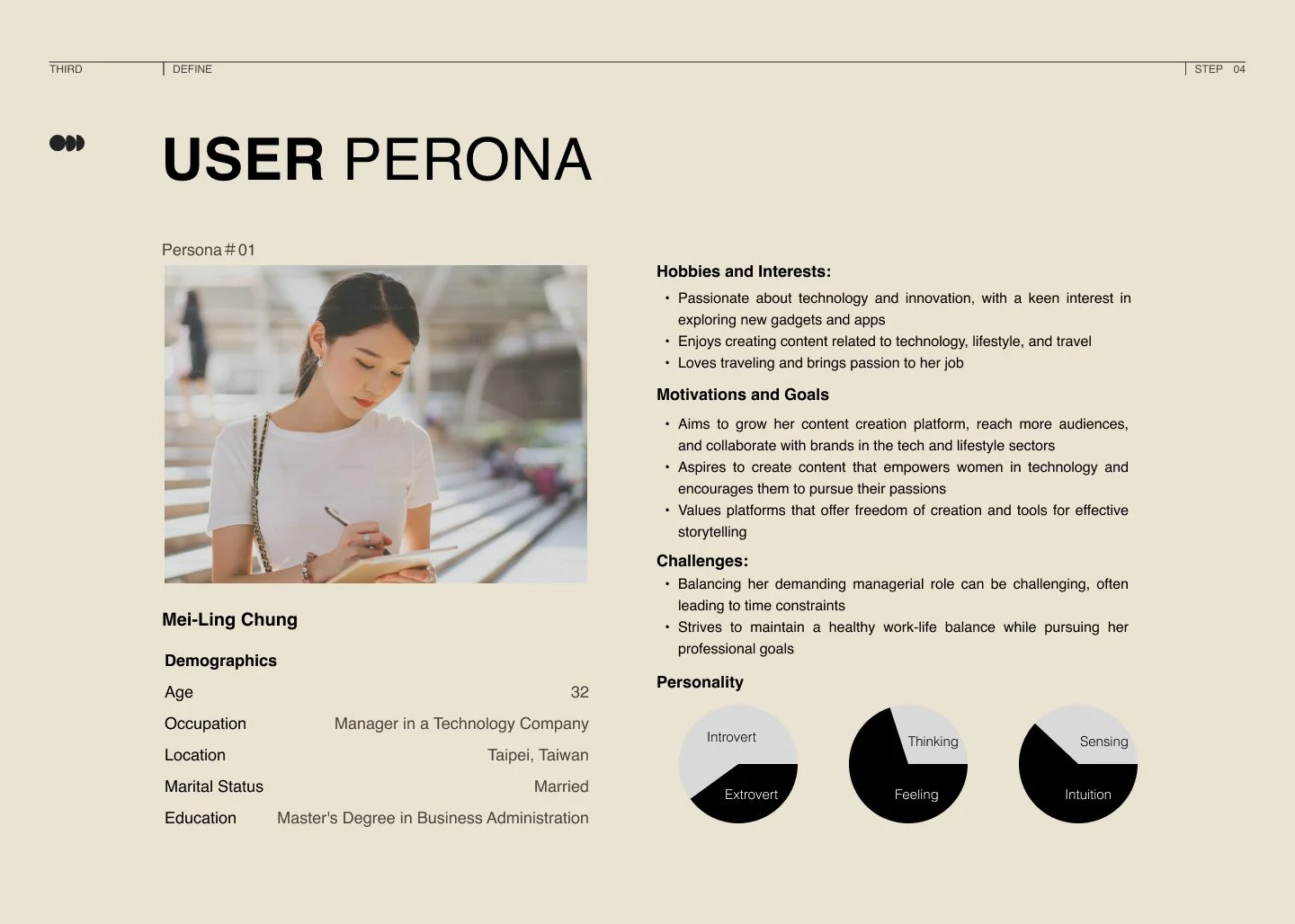
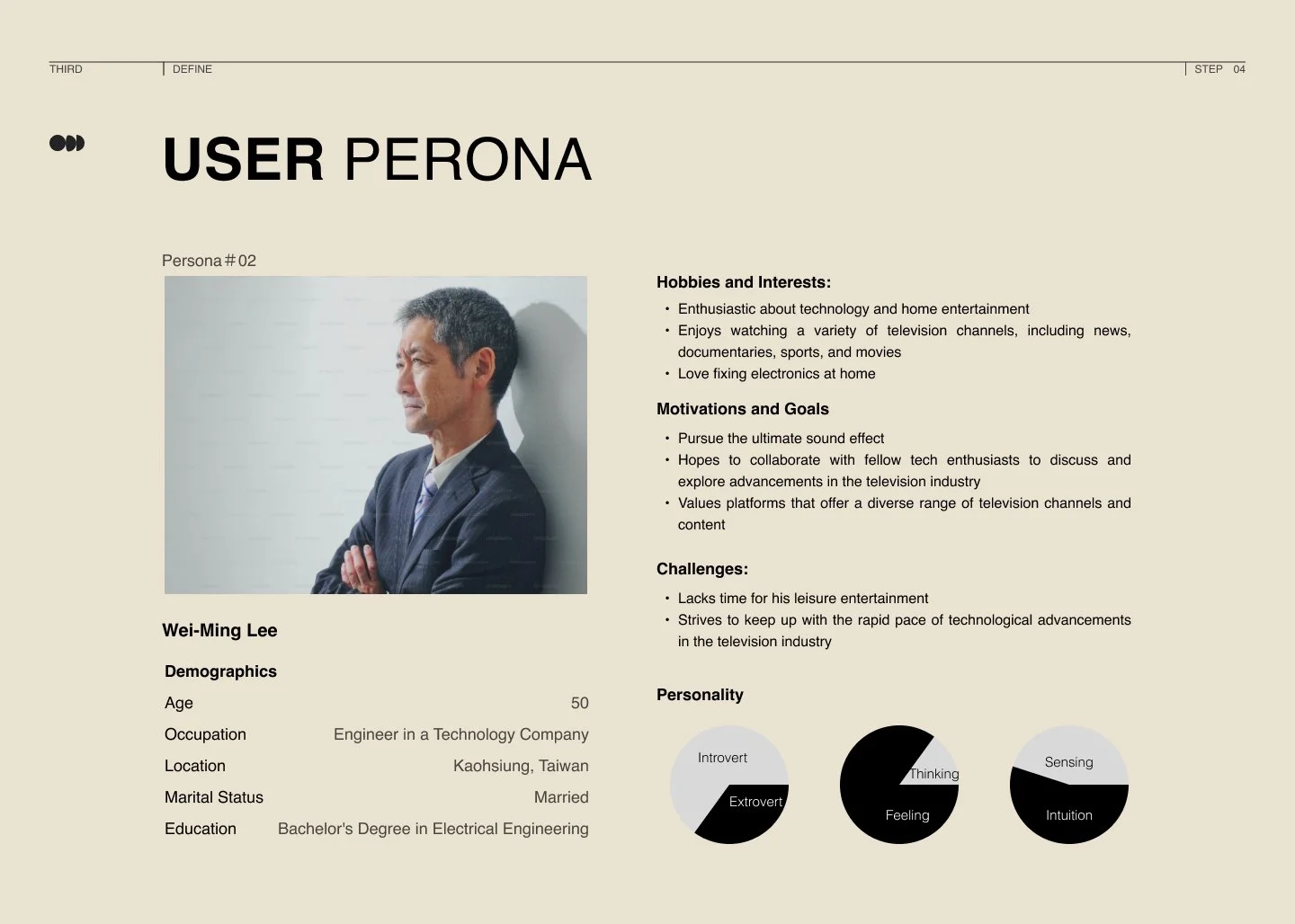
The analysis revealed that 65% of elderly users struggled with text-based searching, leading directly to our Voice Assistant solution
Development
Bridging Insights to Logic
In this phase, I translated research insights into a structured user experience framework, ensuring that every function serves a real-world purpose.
User Storyboarding & Empathy Mapping: I utilized visual storytelling and empathy maps to anchor the product within authentic life scenarios, ensuring the design remained centered on user emotions and pain points.
Information Architecture & Task Flows: I mapped out complex business logics into intuitive operational paths, specifically focusing on subscription models, voice navigation, and T-Commerce (TV Shopping).
Iterative Refinement & Decision Logic: By using decision diamonds to optimize transition paths, I minimized user friction and ensured cross-platform consistency and technical feasibility.
Design
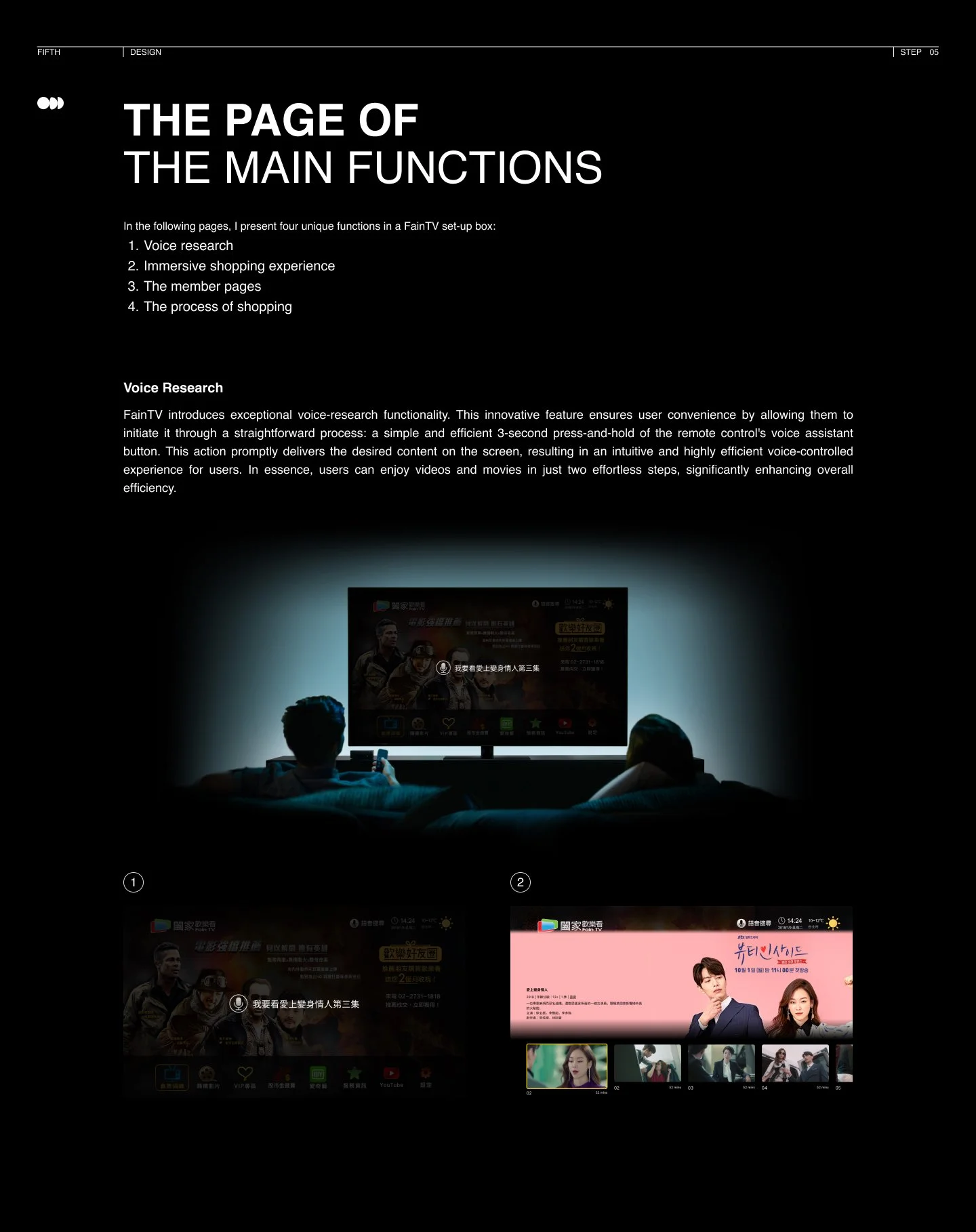
Intelligent Voice Search: Streamlines navigation by allowing users to locate content via a 3-second remote button press, reducing a complex search to just two steps.
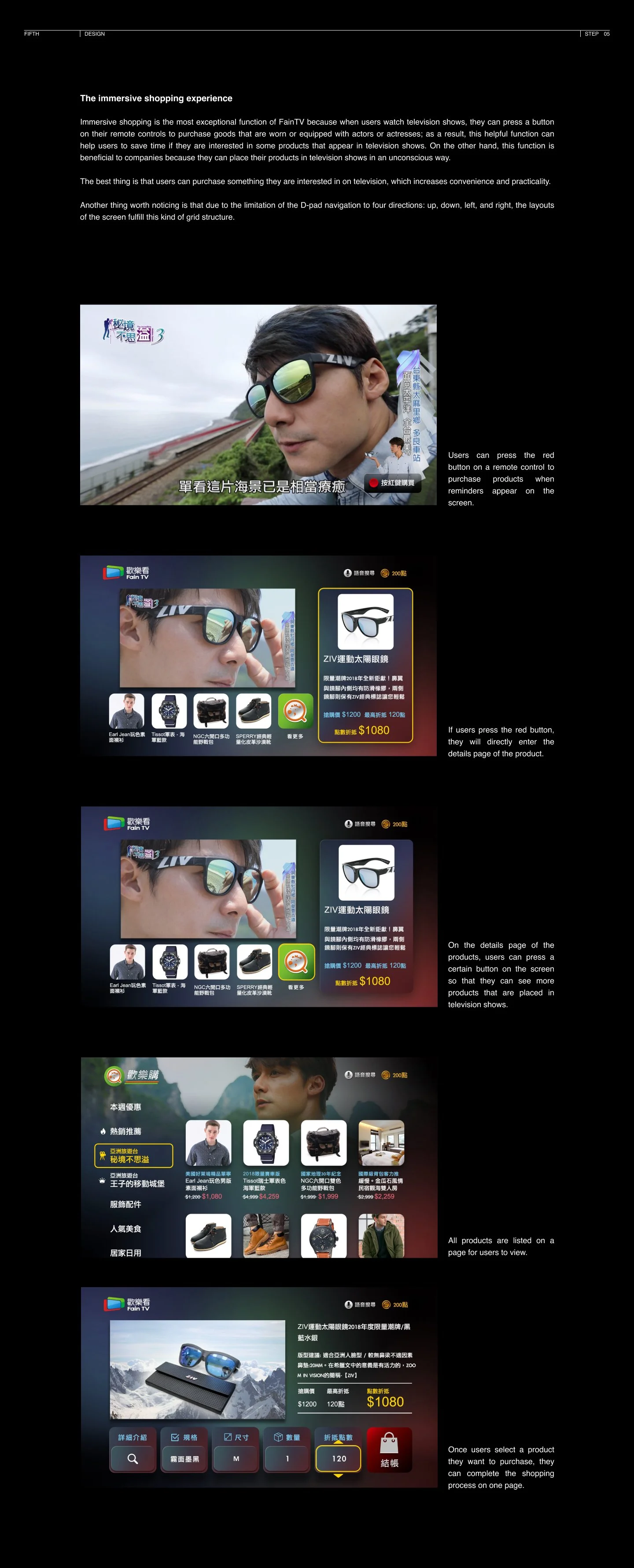
Immersive T-Commerce: Enables real-time shopping during broadcasts, allowing viewers to purchase featured items without disrupting the viewing experience.
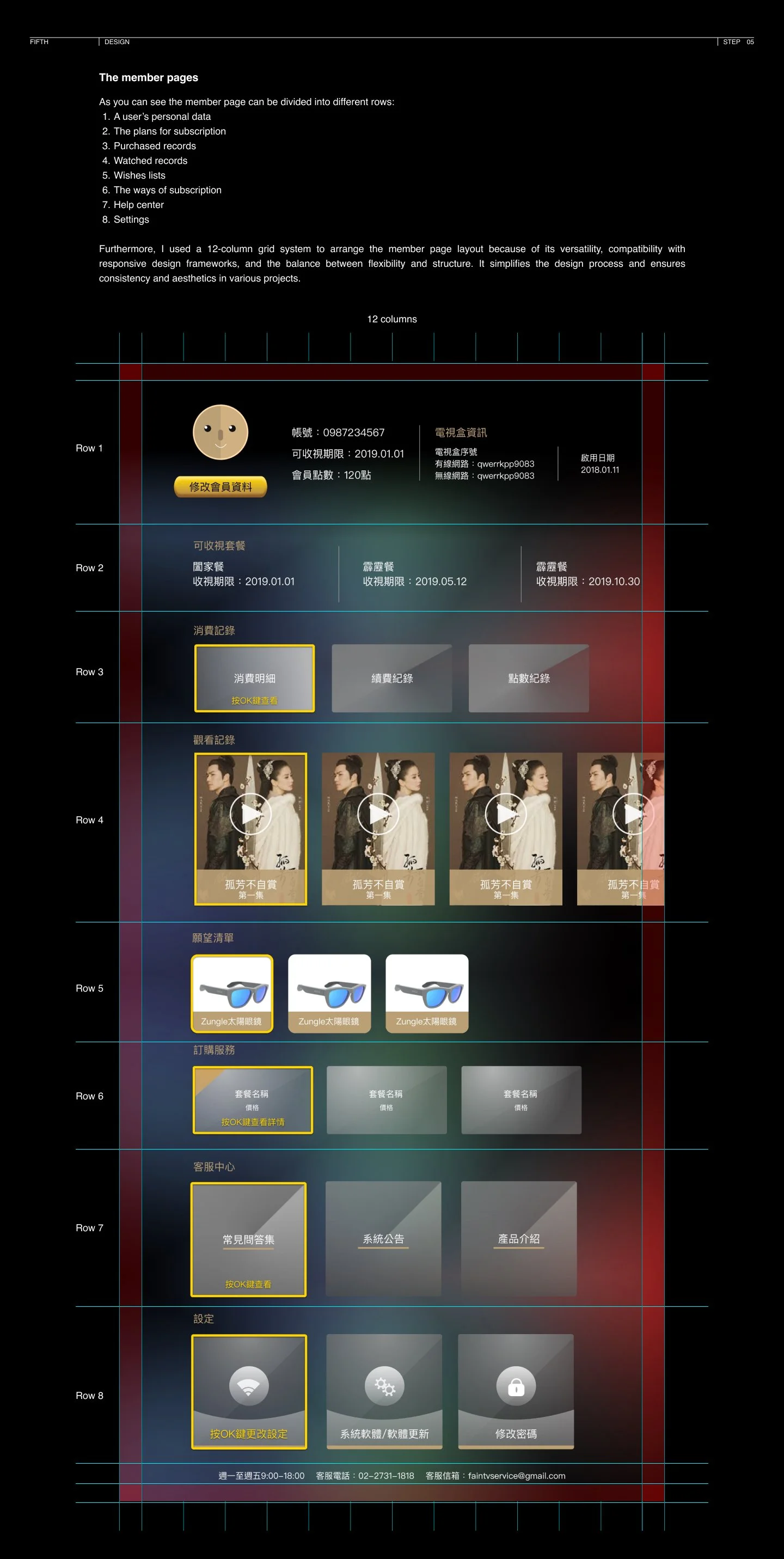
Structured Account Management: Utilizes a 12-column grid system to organize diverse member data, ensuring a balanced and responsive layout across all platforms.
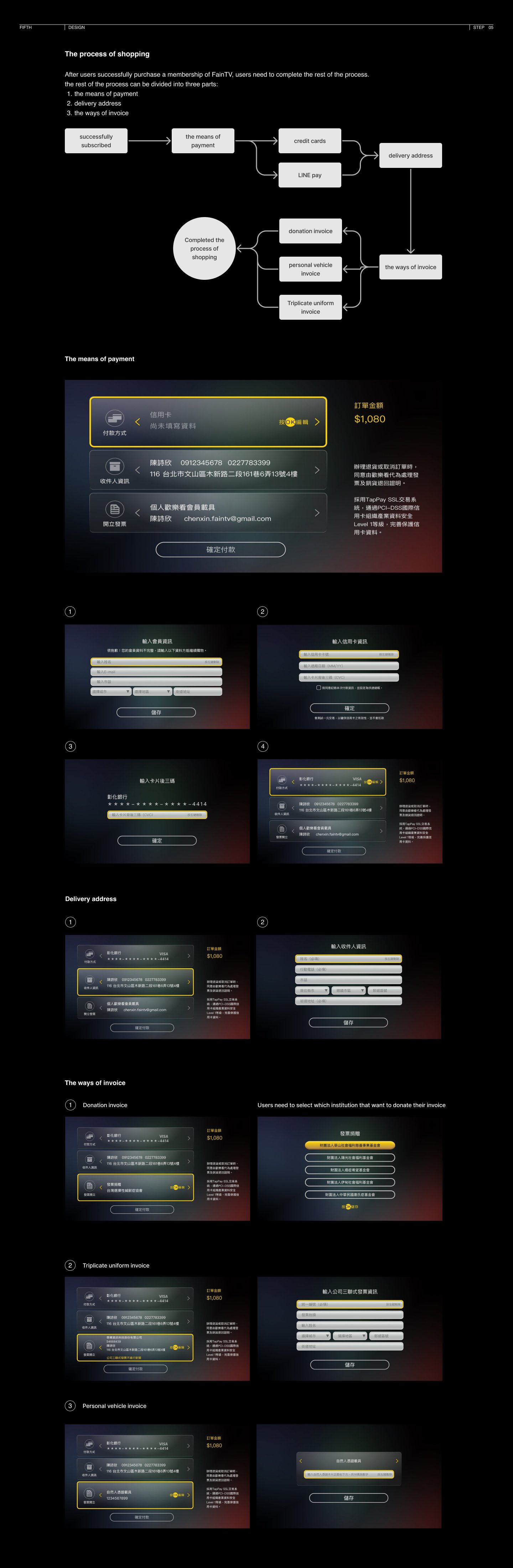
Optimized Checkout Flow: Simplifies the multi-step purchasing journey into a linear path optimized for D-pad remote navigation and high conversion.